Ground conditions matter
Tilt-bed drops need firm, dry ground and overhead clearance of about 20 ft while the bed is raised. Soft ground can turn a drop into a failed delivery.
LTL & FTL We ship partial loads (LTL) as well as full truckloads (FTL). Partial loads (LTL) and full truckloads. Request an LTL quote
Tilt-bed trucks · Flatbeds · Port & rail drayage
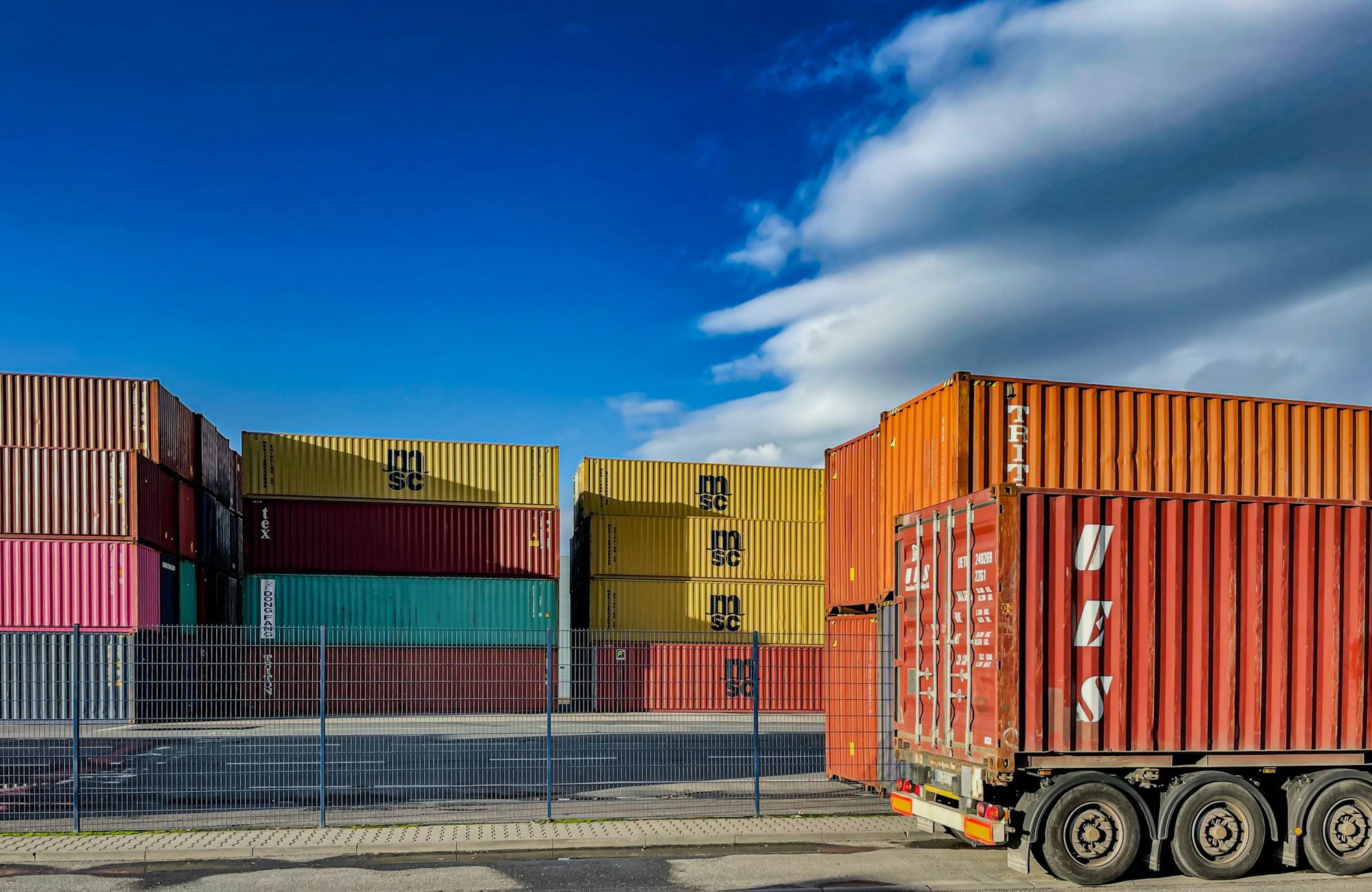
A tilt-bed truck slides the container straight onto the ground, so no crane or forklift is needed. Flatbed delivery is cheaper over long distances, but you unload with your own equipment.

Rules of the road
Tilt-bed drops need firm, dry ground and overhead clearance of about 20 ft while the bed is raised. Soft ground can turn a drop into a failed delivery.
Not with tilt-bed delivery: the container slides off the bed onto the ground. Flatbed delivery needs a crane, forklift or other equipment on site.
Yes. Loaded port moves are priced with chassis and terminal charges, so they are confirmed by our team after you submit the quote.
Other freight
Carried by Ryecroft Freight trucks or, outside our lanes, by a vetted partner carrier named on your booking.