Shipping container delivery costs, 2026
Tilt-bed delivery of a 20 ft container costs about $522 for a 35-mile local drop in our pricing engine (October 2026), and a 40 ft high cube about $672. Over 274 miles a 40 ft high cube costs about $1,605 by tilt-bed, or $1,381 on a flatbed if you can unload it yourself.
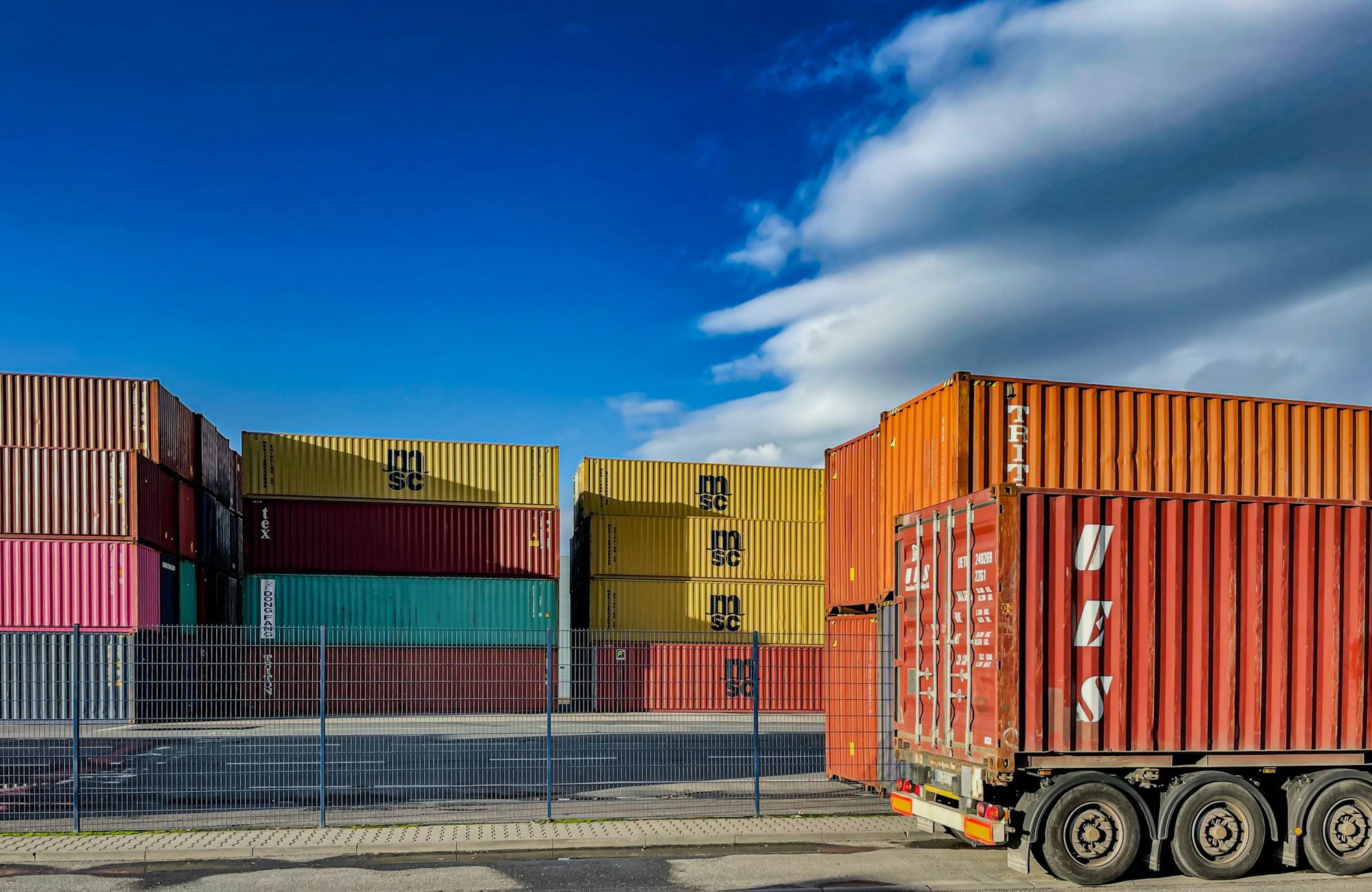
Container delivery is priced on three things: the delivery method, the container size and the miles. The prices in this guide come from our own online pricing engine, so they match what the calculator shows for those routes. They assume an empty container that is ready to load.
Three ways a container arrives
Conexwest, a container seller, gives buyers four delivery choices: a tilt-bed, a tilt-bed with a trailer, a flatbed or a crane truck, depending on the container size, the site and where it needs to sit. For most deliveries to homes, farms and job sites, it comes down to tilt-bed or flatbed.
Tilt-bed
The truck backs up to the spot, raises the bed and drives forward while the container slides off onto the ground. No crane or forklift is needed, and the drop itself usually takes 20 to 30 minutes on site. It is the most common way to deliver an empty storage container.
Flatbed
A flatbed carries the container level, and you lift it off with your own crane or forklift. Container shippers put flatbed at roughly a dollar a mile less than tilt-bed. In our engine, the same 274-mile delivery of a 40 ft high cube costs $224 less on a flatbed. It makes sense for long runs to sites that already have lifting equipment.
Port and rail drayage
Loaded containers from a port or rail ramp travel on a chassis, a wheeled frame that the container sits on. Drayage adds charges that a storage-container drop does not have: chassis rental by the day, terminal fees, and storage if the box is picked up early or sits waiting. Those depend on the terminal and the timing, so we confirm port moves by hand after you submit the quote.
| Method | How it unloads | Best for |
|---|---|---|
| Tilt-bed | Slides off onto the ground | Empty containers to sites with no lifting equipment |
| Flatbed | Your crane or forklift lifts it off | Long distances to yards, farms and plants with equipment |
| Drayage | Stays on a chassis, or is lifted at the terminal | Loaded import and export containers |
Site requirements for a tilt-bed drop
A tilt-bed needs room to pull straight ahead as the container slides off. Requirements vary with the truck. One container supplier, Dry Box, asks for about 60 ft of straight clearance for a 20 ft container and about 120 ft for a 40 ft, 10 ft of width and 16 ft of overhead clearance. Our planning numbers are in the same range: about 100 ft of straight pull-out for a 40 ft container, and about 20 ft clear overhead while the bed is raised.
- Firm, level ground. Gravel, compacted base or concrete. Soft, wet or freshly dug ground can stop a delivery.
- A straight approach. The truck needs to line up with the spot and drive straight forward as it unloads.
- Overhead clearance. No power lines, branches or roof edges over the drop zone or along the driveway.
- Width. Gates, posts and parked vehicles cleared from the path.
- Grade and bends. Steep driveways and S-bends need photos before we schedule. Dry Box flags driveways steeper than a 4% grade.
Setting the container on gravel or blocks rather than bare dirt also helps keep the floor dry. Send us photos of the spot and the approach when you book. It takes a minute and avoids a wasted trip.
20 ft vs 40 ft vs high cube
20 ft
The shortest standard container needs the least space to drop and is the cheapest to deliver. Our 35-mile example costs $522, and $741 at 108 miles.
40 ft
Twice the length needs a longer truck and about twice the pull-out room. On the same 35-mile local delivery, a 40 ft high cube costs $150 more than a 20 ft in our engine.
High cube
A high cube has the same footprint as a standard container of the same length but stands one foot taller: 9 ft 6 in instead of 8 ft 6 in. The extra height helps with shelving and tall equipment inside. Check door clearance and anything overhead at the site, since the box sits a foot higher. We also deliver 45 ft high cubes; they need even more room to drop.
Example prices
| Load | Route | Miles | Price | Range |
|---|---|---|---|---|
| 20 ft, tilt-bed, Port Houston to Katy | Houston, TX → Katy, TX | 35 | $522 | $444 to $652 |
| 20 ft, tilt-bed, Port Houston to Bryan | Houston, TX → Bryan, TX | 108 | $741 | $630 to $927 |
| 40 ft high cube, tilt-bed, Port Houston to Katy | Houston, TX → Katy, TX | 35 | $672 | $571 to $840 |
| 40 ft high cube, tilt-bed, Port Houston to Dallas | Houston, TX → Dallas, TX | 274 | $1,605 | $1,364 to $2,007 |
| 40 ft high cube, flatbed, Port Houston to Dallas | Houston, TX → Dallas, TX | 274 | $1,381 | $1,174 to $1,727 |
Each price is a flat local delivery charge that covers the first miles, a per-mile rate beyond that, and a fuel surcharge tied to the weekly U.S. diesel average. For comparison, one container seller lists 2025 tilt-bed delivery at $300 to $700 under 50 miles and $500 to $1,000 for 50 to 150 miles. Prices outside those bands vary widely, so compare quotes for your actual distance.
Before delivery day
- Decide which way the doors should face and tell us when you book
- Mark the exact spot and measure the approach
- Clear vehicles, equipment and low branches from the path
- Have someone on site who can show the driver the spot
- If it rained, check the ground the day before and call us if it is soft
For your own address, the Ryecroft Freight calculator prices tilt-bed or flatbed delivery for your address, with every line shown.
Common questions
Do I need a crane or forklift to unload?
Not with tilt-bed delivery. The bed tilts and the container slides off onto the ground. Flatbed delivery is cheaper over long distances, but you need a crane or forklift on site that is rated for the container.
How much space does the truck need?
Plan on a firm, level, straight approach of about 100 ft for a 40 ft container, less for a 20 ft, plus room to the sides and about 20 ft of clear space overhead while the bed is raised. Send photos of the spot when you book and we will confirm.
Which way will the doors face?
You choose. Tell us which way you want the doors to face when you book, so the container is loaded on the truck the right way round for your spot.
Can you pick up a container from the port?
Yes. Port and rail moves are priced with chassis and terminal charges, which depend on the terminal and how long the box sits, so our team confirms them after you submit the quote.
What happens if the ground is too soft on delivery day?
The driver will not drop a container where the truck could get stuck or the container could settle unevenly. The delivery is rescheduled, and the truck-ordered-not-used charge listed on your quote applies.
Sources
- GiantLockBox: Shipping container delivery costs
- Dry Box: Container delivery site requirements
- Conexwest: Container delivery options
- ShipACar Inc.: How much does it cost to ship a container within the United States
- Ship4wd: Drayage fees guide
- Sea Containers: 20 ft high cube container dimensions
- PLS Logistics: How to calculate a fuel surcharge
This guide is general information, not legal, tax or insurance advice. Rules and prices change; your online quote shows the current price for your load.